
Hindu Temple Visit
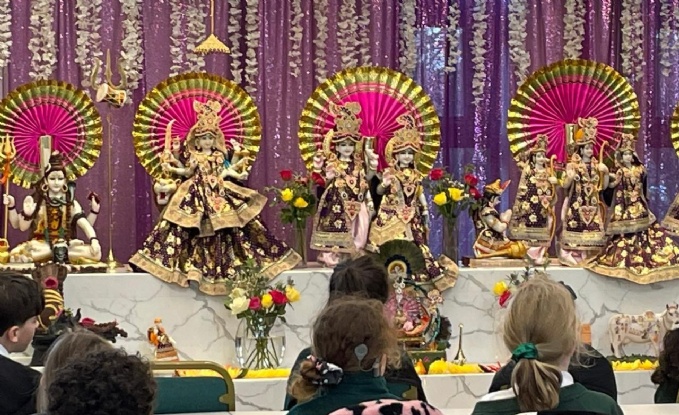
This week, year 4 had the opportunity to visit a Hindu temple in Broughton as part of their topic on India.
On arrival, we were warmly welcomed with the greeting of ‘Namaste’. The term "namaste" is derived from Sanskrit, combining "nama," meaning "to bow," and "te," meaning "to you." Therefore, it translates to "I bow to you." This greeting embodies respect and reverence, often used in various contexts such as saying hello, goodbye, or expressing gratitude. The children willingly returned the greeting.
After removing their shoes, they were led into a hall, which was beautifully decorated with statues and paintings of their deities (gods) and symbols of the Hindu religion. Once settled, the volunteers of the temple introduced themselves and gave an outline of the morning activities.
The children listened intently and learnt about many aspects of the Hindu religion. It started with an introduction to Hinduism being the oldest religion around and the third largest religion in the world. In India, it is the main religion. It was explained that the term Hindu originally refers to the people living near the Sindu River (Indus River) and is derived from the Sanskrit word ‘Hindu’ (हिंदु).
Next, they introduced two Hindu symbols. The first was the Om symbol (ॐ). It represents the essence of the ultimate reality, consciousness, and the universe. Om is often at the beginning and end of prayers and chants, symbolizing the Supreme Soul or Brahman. The children had a go at chanting the sound and realised the calming effect it had on the body and also it was a sound that could be made without using the tongue.
Brahman was introduced as the Hindus’ highest universal principle. The other deities(gods) were then explained as representing will power, strength, creation, and various aspects of life and the cosmos. The children were fascinated by the looks of the various deities and the stories behind them. The statues of them stood at the front of the temple in their beautiful finery. In the question and answer session at the end, the children’s main fascination was with the gods.
The volunteers also spoke about the Hindu festivals and many of our Hindu children shared their knowledge at this point. They talked about Diwali, Holi, Rakhi etc. There are so many festivals that they have at least one a month, sometimes more, we were told. This reinforced many of our assemblies that we deliver on the Hindu religion in school.
They also shared their values that they live by, explaining that Hinduism is a way of life. Their key values included: Truth: Hindus believe in the eternal truth and strive for knowledge and understanding of it.
Karma: Good and bad actions in life affect one's future, leading to the cycle of rebirth.
After having a chance to wander around the temple and see the statues and paintings etc up close, the children ended the morning with their lunch – a vegetarian one. It was explained most Hindus are vegetarian as they do not believe in killing animals for their food and therefore have a plant-based diet. All the children were quite willing to conform to this.
It was a very informative and valuable visit, that the children thoroughly enjoyed and their behaviour was exceptional. We were very proud of them for being so respectful.